Sophie Thun. Secret Performance

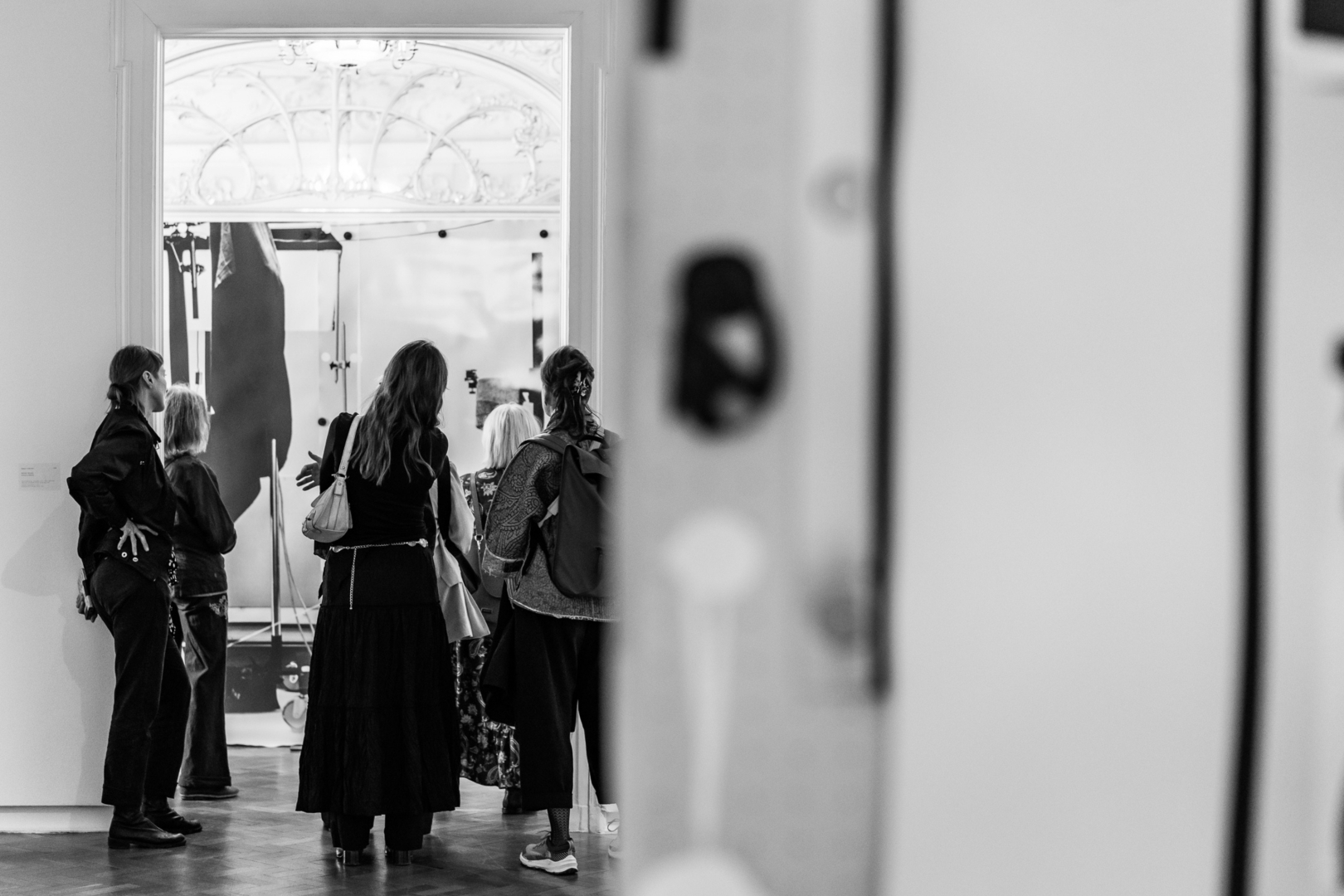
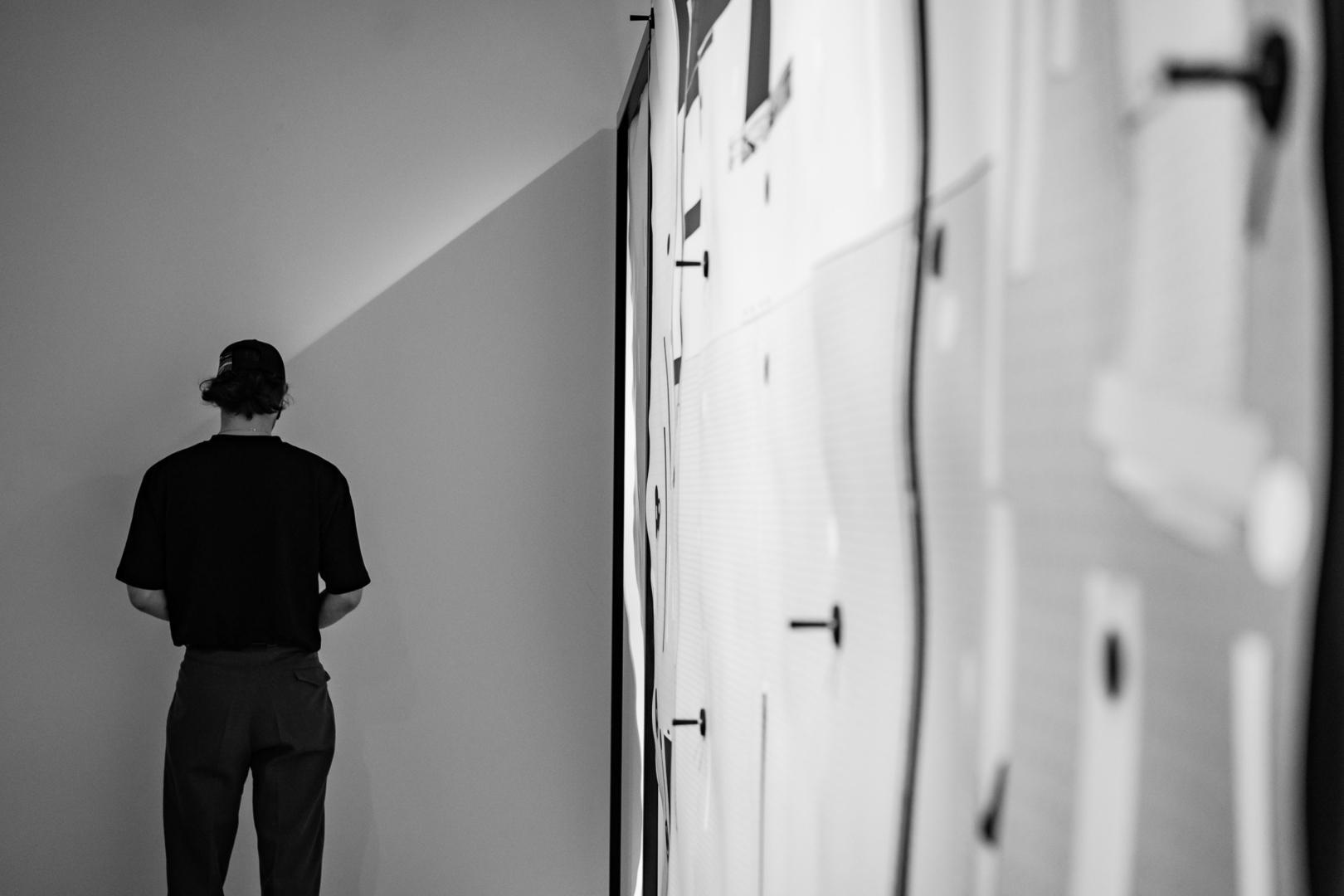
Sophie Thun’s exhibition Secret Performance at Muzeum Sztuki seeks to contextualize the artist’s photographic practice, bringing to light aspects related to an analysis of the medium itself as a way of producing an image of reality. Indeed, the process of creating a photogram is subject to reflection not only as (the absence of) an image, but also as a containing of the spatial features of an object. The title of the exhibition indicates another dimension of the project, one that is related to the work itself, wherein the darkroom is understood as a space of notable centrality. After all, it is here where the activities take place, and that allow for the creation of the image itself.
INFO
Place
Time
Opening
curators
exhibition coordination
graphic design
editorial coordination
communication
education
conservation
installation
acknowledgements:
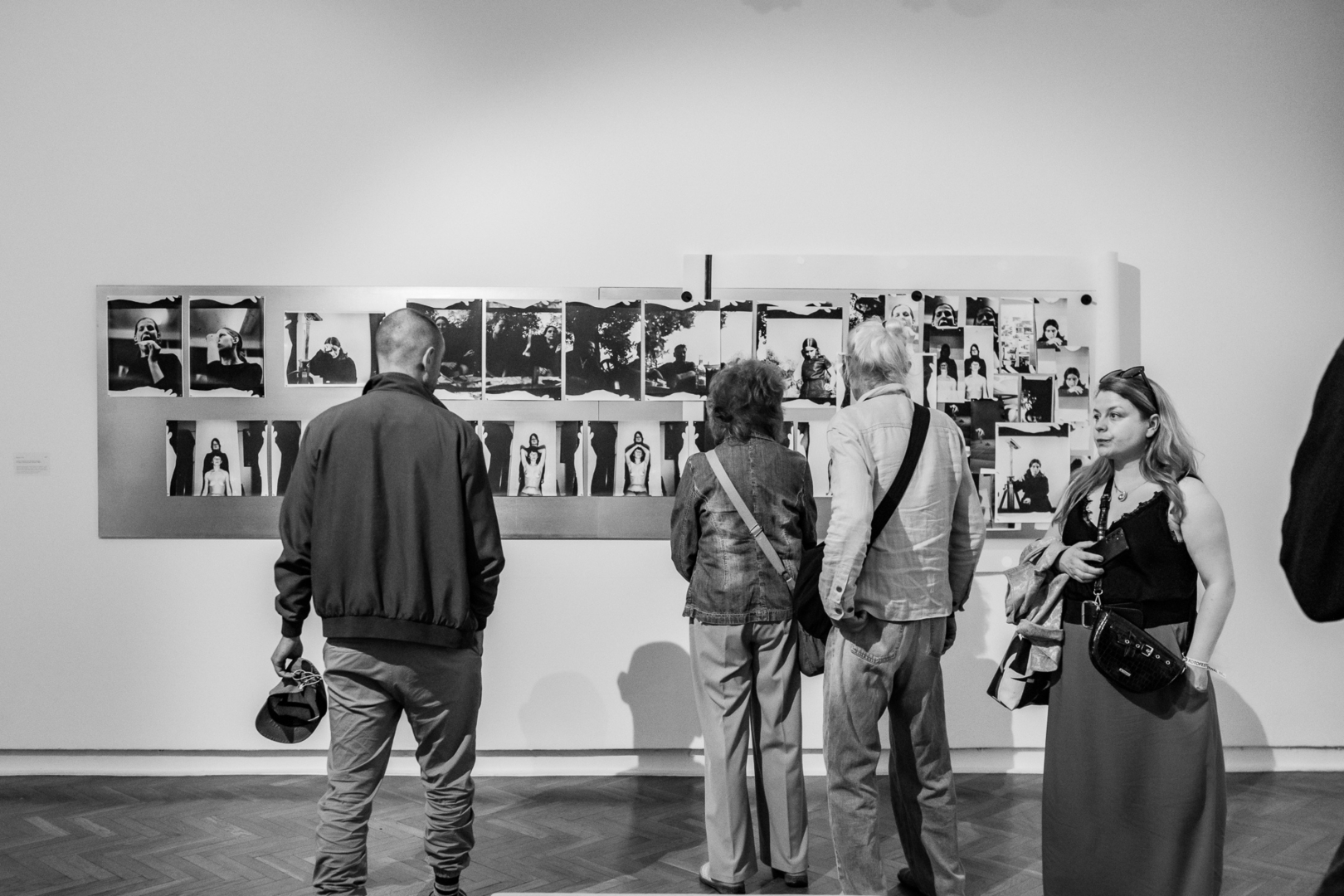
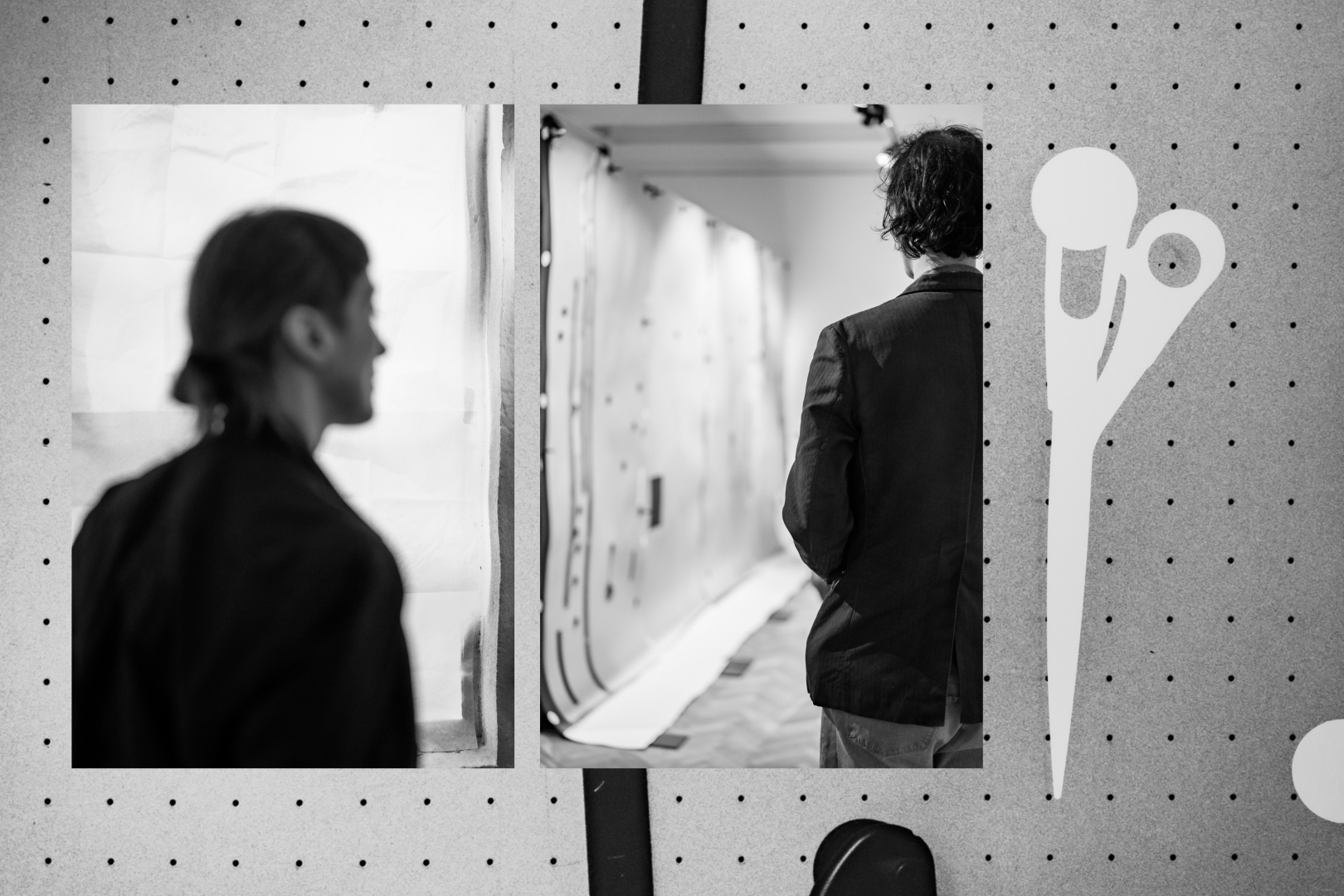
On a metal wall covered with rows of dots, individual photos are attached with magnets. They feature scissors, scraps of photosensitive paper, measuring tapes, and abstracted body parts. They create a constellation of objects that seem both familiar and alien. They show hands either holding the compositions or framing them. The exposed elements, those that are usually hidden or are perceived as commonplace, reveal the process of creating multi-plane photographs; and by doing so prove the presence of the someone who made them.
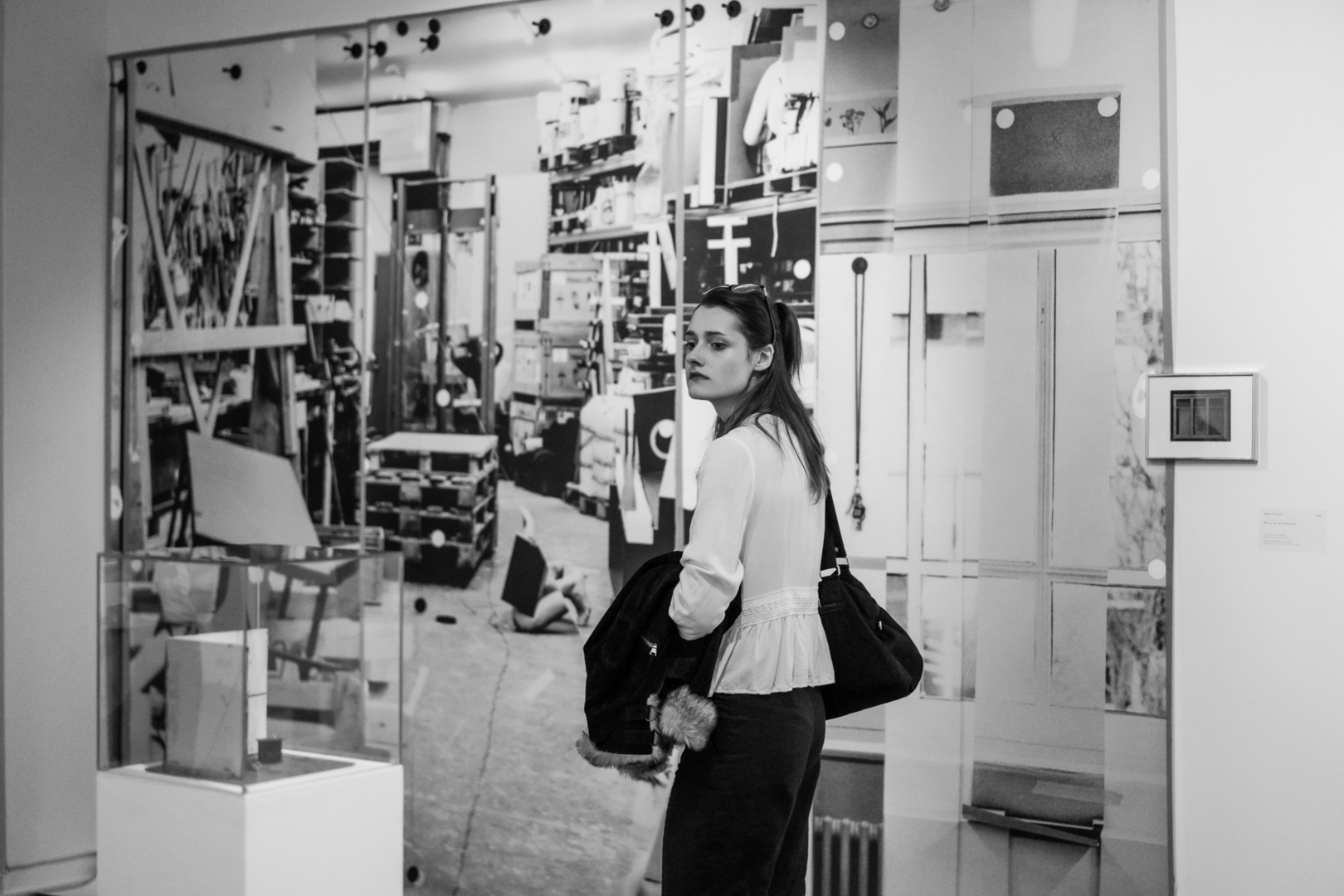
Sophie Thun, when working on her photographs, spends long hours alone in the darkroom. She exposes the photographs, crops them, and arranges them anew in order to re-expose their subsequent combinations. Following this, the artist then documents her own presence in empty exhibition spaces, meticulously recording the chronology of performances, invisible until the last print is made. In this way, places hidden and inaccessible to most visitors are revealed—darkrooms shrouded in darkness, empty exhibition halls, technical rooms and storage spaces. In repetitions and montages, which are large-format black and white prints, Thun incorporates previously taken photographs, fragments of works by other artists, and elements of the surroundings. Seeking to reveal the secrets of the medium, she is interested not only in issues of space, time, memory and representation, but also expresses care for the very materiality of photography.
Thun looks to draw on the potential of analogue photography, which is an overriding theme of her oeuvre: not only for formal reasons, but particularly because of the correspondence which photography enjoys with avant-garde and conceptual art. The artist has also included the collections of the Muzeum Sztuki in her recent works. By doing so, Thun has traced the convergence of her own practice with the history of contemporary art, with the legacy of artistic photography since the 1930s, and with traditional photographic techniques; to include attempts at overcoming their limitations.
The first part of the exhibition focuses on the theme of space and its recording, capturing and overwriting with the use of photography. Thun’s starting point are the photographs by Mikołaj Smoczyński from the Secret Performance series (1983-1993), which documented processes that are usually ignored, but which took place within the space of his studio in Lublin. Starting from the dimensions of his own body, Smoczyński sought to document the relations between objects and space, ultimately simplifying his method of work to a tracking of the movement of light falling on the studio floor or the study of a drying puddle. Space, cleared of excess, became a forum for him to observe how the character of a place changes with someone’s presence; and to discern what results from this interaction. The strategies of dismantling and relocating have also accompanied Thun since the beginning of her photographic practice. In 2015, she began to document elements found in exhibition spaces on 1:1 scale prints. The play of covering and exposing space is also a spectral record of presence, and a self-portrait in hiding. This same play enables the creation of a photograph.
The next aspect of the exhibition touches upon issues related to experimental photography. Here the artist’s photograms enter into a dialogue with the works of Franciszka and Stefan Themerson, Karol Hiller and Daniel Spoerri, among others, who, motivated by avant-garde experimentation, broke with artistic tradition by combining intertextual references with various techniques. A similar approach can be seen in the works of Sophie Thun. Although she makes recourse to analogue photography, invented almost 200 years ago, she has endeavored to reinvent the practice, making recourse to a plethora of methods developed by generations of artists. This has led the artist to create with methods used by avant-garde circles, such as photogram or montage. What is more, Thun has crossed the boundaries of photography, combining the medium with performance and installation. Indeed, in this instance, she has sought to place the photograms as close to reality as possible, transferring objects from her own apartment to the darkroom. The only stipulation is their size. They cannot exceed 20.32 × 25.4 centimeters—the size of a negative sheet. Thun places them on exposed paper, retaining them in an unchanged form—and then replicates them. By doing so, she immortalizes time, just as Daniel Spoerri once preserved a dinner with friends after they had already left.
The final part of the exhibition focuses on the issue of care and maintenance in Thun’s work. Thun’s frames include the works and archives of other artists. For example, the exhibition includes a documentation of the work of Zenta Dzividzinska and Ulay. Dzividzinska was a Latvian photographer whose artistic activity is not widely known. In 2022, Thun had the opportunity to work with the artist’s archive—the initial plan for their joint exhibition became an opportunity to focus on Dzividzinska’s negatives, which Thun would successively develop and arrange into installations composed of many prints throughout the exhibition. The act of shedding light on the work of a forgotten artist was one infused with symbolic meaning—in the work of both, there are similarities related to their methods of representation, and their focus on the performative potential of creating one’s own image. In that instance, Thun took up the mantle of this approach, which had been abandoned by Dzividzinska in favor of earning a living as a graphic designer so as to support her family. In another body of work, Thun borrowed elements from Ulay’s artistic legacy by photographing his polaroids. As with Dzividzinska, the starting points were the common elements to be found in the works of both artists. The issues of self-representation, gender, and the use of photographic techniques allowed Thun to see herself in Ulay’s work as if in a mirror. In this respect, the artist adopted the approach of an art historian, or even an archivist, adding yet another lens through which we can view her work.
In addition to capturing the common points between Thun’s work and avant-garde and conceptual traditions, the exhibition considers the medium in a broader, and more contextual way, remaining in close dialogue with the artist’s creative methods. For this reason, the exhibition also includes works made in other techniques that refer back to the basic elements of photography, such as light, time, and space. Put simply, they complement Thun’s complex practice, which oscillates between various polarities: abstraction and representation, shade and light, domination and submission, exposure and concealment, technical precision and the sensitive gaze.
Patronage:

Media patronage:

Share the information
Załączniki
Galeria