110th anniversary of the Łódź Philharmonic Symphony Orchestra
❗️𝗖𝗵𝗮𝗻𝗴𝗲 𝗼𝗳 𝘀𝗼𝗹𝗼𝗶𝘀𝘁 𝗮𝗻𝗱 𝗿𝗲𝗽𝗲𝗿𝘁𝗼𝗶𝗿𝗲 𝗼𝗳 𝘁𝗵𝗲 𝗰𝗼𝗻𝗰𝗲𝗿𝘁 𝟭𝟰.𝟬𝟮❗️
Please be advised that due to reasons beyond our control, the Soloist and program for Friday's concert will change. Instead of Piotr Paleczny, Szymon Nehring will perform the Piano Concerto in E-flat Major No. 9 KV 271 “𝗝𝗲𝘂𝗻𝗲𝗵𝗼𝗺𝗺𝗲” by 𝗪𝗼𝗹𝗳𝗴𝗮𝗻𝗴 𝗔𝗺𝗮𝗱𝗲𝘂𝘀 𝗠𝗼𝘇𝗮𝗿𝘁 with the FŁ Symphony Orchestra.
February 17 marks exactly 110 years since the first concert of the Łódź Symphony Orchestra, the predecessor of the Łódź Philharmonic Symphony Orchestra. Professor Zygmunt Krauze composed the piece De Arte, De Homine especially for this occasion.
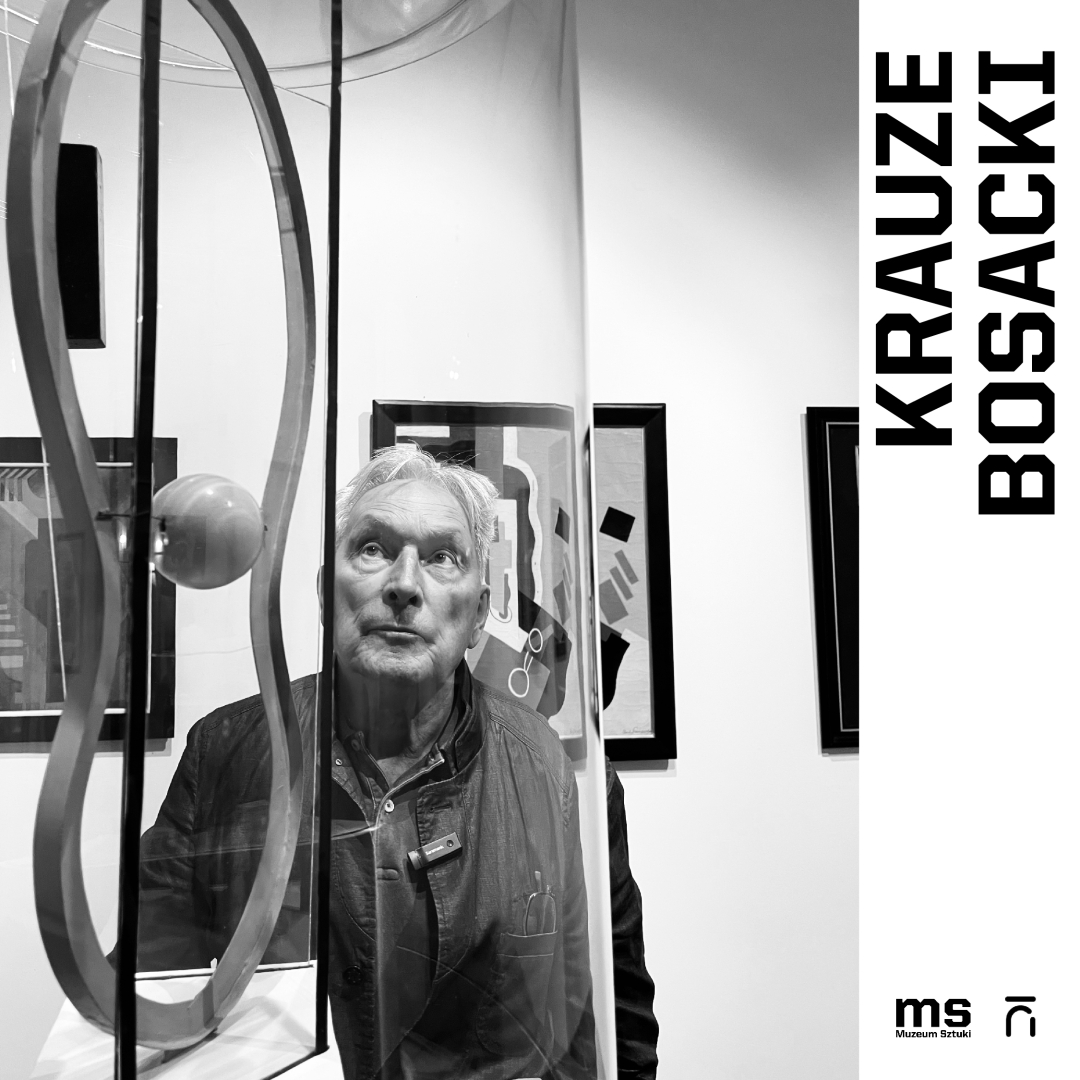
The piece was inspired by the figure of Władysław Strzemiński, the author of Unism, a concept that Krauze transferred from visual works to the realm of music. As a leading representative of the musical avant-garde, the professor collaborated and participated in many events at the Muzeum Sztuki in Łódź over the course of four decades. The museum is honoured to be a partner of this event.
INFO
Place
Time
De Arte, De Homine is a two-part composition, drawing directly on the Łódź experiences and inspirations, and thus establishing a connection with the Muzeum Sztuki. In the first part it shows the exquisite, visionary idea of Władysław Strzemiński’s Unistic art, and in the second it focuses on his life – dramatic, full of pain, conflicts, and hardships. “The shape of this piece will be determined by contrasts,” reveals Krauze. The composition will be accompanied by animation "7/4? created by Piotr Bosacki, a multimedia artist working at the intersection of various artistic disciplines: music, visual arts, animation, and literature. The evening's program will also include a performance by Szymon Nehring, one of the most interesting Polish pianists of the younger generation, winner of numerous competition laurels, led by First Prize at the Artur Rubinstein International Piano Competition in Tel Aviv. In his performance we will hear Mozart's Piano Concerto in E-flat Major “Jeunehomme,” distinguished by its masterful combination of depth of expression, striking virtuosity and extraordinary vitality, sometimes referred to as “Mozart's Eroica.”
In 2023, the Muzeum Sztuki in Łódź purchased the Zygmunt Krauze Archive, which consists of over a hundred scores and sketches, starting from school notebooks, ending with the latest compositions, as well as the composer's correspondence, numbering some 350 letters, including from Nadia Boulanger, John Cage, Henryk Mikołaj Górecki, Wojciech Kilar, Witold Lutosławski, Michael Nyman, Bogusław Schaeffer, and Tomasz Sikorski. The following year (2024), the Museum accepted a gift from the artist, which supplemented the collection with three of the latest scores and over 200 letters.
It was no coincidence that the composer’s archive ended up in the Muzeum Sztuki. Over the past decades, the composer, as a representative of the avant-garde in Polish music, collaborated and participated in events of major significance for the Museum, including the exhibition Presences Polonaises, which took place in Paris in 1983, and Europa, Europa, shown in Bonn in 1994.
In his musical work, Krauze drew intensively on inspiration from the visual arts. The key here were the Unistic pieces, composed in the early 1960s as a musical response to the impulse flowing from the avant-garde painting of Władysław Strzemiński. The composer encountered the latter’s work in December 1956 during an exhibition at the Municipal Art Gallery in Łódź. Krauze’s first works with the word “Unism” in the title appear as early as the late 1950s.
Inspired by the theory of Unism, Krauze created forms based on modules, creatively developing the ideas of openness and audience participation. The open structure of the works allowed the recipients to co-shape the final effect.
These ideas were also developed by Krauze in sound installations and happenings, and he became the author of the first spatial-musical compositions in Poland, created in cooperation with architects. The composer made his mark in the history of the Muzeum Sztuki in Łódź with several projects in this vein, e.g. Underground River. Spatial Music (1988, with Wiesław Nowak and Jan Muniak, who designed the architectural structure) and Aria. Spatial-Sound Composition (2007). In 2012 his legendary Spatial-Musical Composition, created with architect Teresa Kelm and sculptor Henryk Morel and originally presented in 1968 at the Współczesna Gallery in Warsaw, was featured in the exhibition Sounding the Body Electric. Experiments in Art and Music in Eastern Europe 1957–1984. Since 2013 in the Museum’s collection, this pioneering work is the first sound installation in Poland inspired by the ideas of Katarzyna Kobro. Also in 2013, the Museum released the album Zygmunt Krauze. Spatial Music. The artist has performed at and during events organized by the Museum, including on the occasion of the centenary of the birth of Władysław Strzemiński in 1993 and in connection with the invitation of the Professor by the Museum to the Cantieri del Contemporaneo in Venice on the occasion of the exhibition Stefan Krygier. Form Condensation Center.
In the branch of the Museum, Herbst Palace, Krauze also performed Unistic Composition ( performed in 2022) with the Silesian Quartet and De Ira, De Dolore (performed in 2023) with the Spółdzielnia Muzyczna Contemporary Ensemble.
In 2024, the Museum twice presented the recently acquired Zygmunt Krauze Archive. Both exhibitions – Margins of the Creation Process. From the Archives of Zygmunt Krauze (from the Mezzanine Exhibition series) and Zygmunt Krauze. Creative Archive – were produced by the Museum’s scientific documentation department.
Zygmunt Krauze (born in 1938) - Composer and pianist. He divides his work into four categories: the first is unistic (unitary) music inspired by the paintings of Władysław Strzemiński; the second - spatial compositions performed in specially constructed interiors; the third - music about music, characterized by the presence of allusions and quotes; the fourth is subjective, deeply expressive "music of returning to the roots”. He is the author of 8 operas and over 100 orchestral, chamber and solo compositions. As a concert pianist, he performs on the most important stages in Europe, the Americas and Asia. In 1967 he founded the band Warsztat Muzyczny, which he managed for 25 years and for which over 120 works were written by leading composers from around the world. He gives master classes and lectures at universities in Japan, South Korea, China, USA and many European countries. He sat as a juror in over 50 international composers' competitions. At the invitation of Pierre Boulez, he became an artistic advisor at IRCAM. In 1987–90 he was the president of the International Society for Contemporary Music, for two decades he was the chairman of the Polish section of this organization. He received an honorary doctorate from the National University of Music in Bucharest (2013) and the Academy of Music in Łódź (2015). He was awarded, among others, the French National Order of the Legion of Honor (2007) and the title Chevalier dans l'Ordre des Arts et des Lettres (1984), and in Poland the Knight's Cross - The Order of Polonia Restituta (2014) and the Gold Medal for Merit to Culture - Gloria Artis (2010). He is an honorary member of the Polish Composers' Union, the Witold Lutosławski Society, Polish and International Society for Contemporary Music.
Piotr Bosacki (born 1977) – an artists active on the borderline of a number of disciplines: music, art, animation, and literature; holds secondary education diploma in fine arts and music; between 1999 and 2004 student of the Academy of Fine Arts in Poznan, where he currently lectures at the Department of Multi-Media Communication. Member of an informal art group Penerstwo and Wojtek Bąkowski group KOT (ceased to exist in 2011).
Partner: