

Władysław Strzemiński "Theory of Seeing"
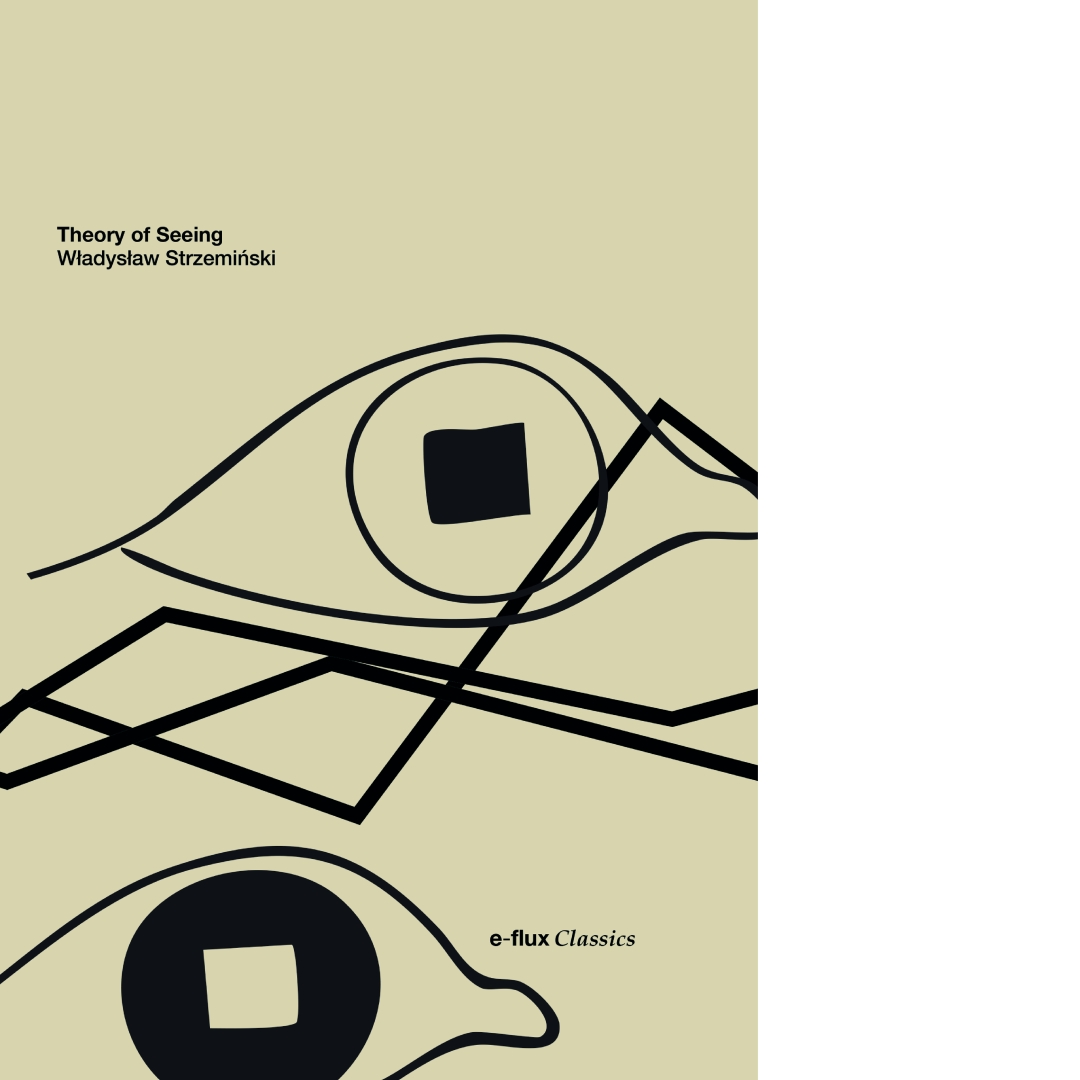
The Theory of Seeing is not only a treatise on visual perception but also a manifesto of modernity, in which Strzemiński—an artist, theorist, and co-founder of constructivism—presents seeing as a historical and social process. His ideas, developed in the context of the Central European avant-garde, remain relevant in contemporary debates on visuality, postcolonialism, and cultural materialism.
INFO
Place
Editing
Translation
Editing and proofreading
Editorial coordination
Editorial cooperation
Graphic design
prepared on the basis of a historical graphic design
text composition
preparation of photos
Władysław Strzemiński's "Theory of Seeing" is one of the most important works on art and perception in the European canon. Nearly seventy years after its first publication, the artist's thought remains surprisingly relevant, and in the age of digital images and artificial intelligence, it takes on new meaning. Strzemiński reminds us that seeing is an act of consciousness shaped by culture, experience, and time. I am convinced that the English-language edition of "Theory of Seeing" will open his ideas to new contexts and inspire not only contemporary artists but also all those trying to understand how we see, interpret, and experience reality today - explains Olga Wysocka, director of the Adam Mickiewicz Institute.
This English-language publication—edited by Iwona Luba and Daniel Muzyczuk, translated by Klara and Wanda Kemp-Welch—fills a significant gap in the international canon of art theory. Based on a historical graphic design by Stanisław Fijałkowski and Stefan Wegner, the edition features a new editorial by Waldemar Węgrzyn (Printscreen).
As Daniel Muzyczuk, director of the Muzeum Sztuki in Łódź, emphasizes:
Władysław Strzemiński's "Theory of Seeing" is not only a manual of perception but also a manifestation of the artist's responsibility to the world—a call to see more attentively. For Strzemiński, seeing was a historical process that shapes consciousness, and his book remains a bold defense of experimental art as a critical tool for understanding reality.
Co-financed by the Ministry of Culture and National Heritage. The book was published thanks to the support of the Adam Mickiewicz Institute.

Adam Mickiewicz Institute Culture.pl
